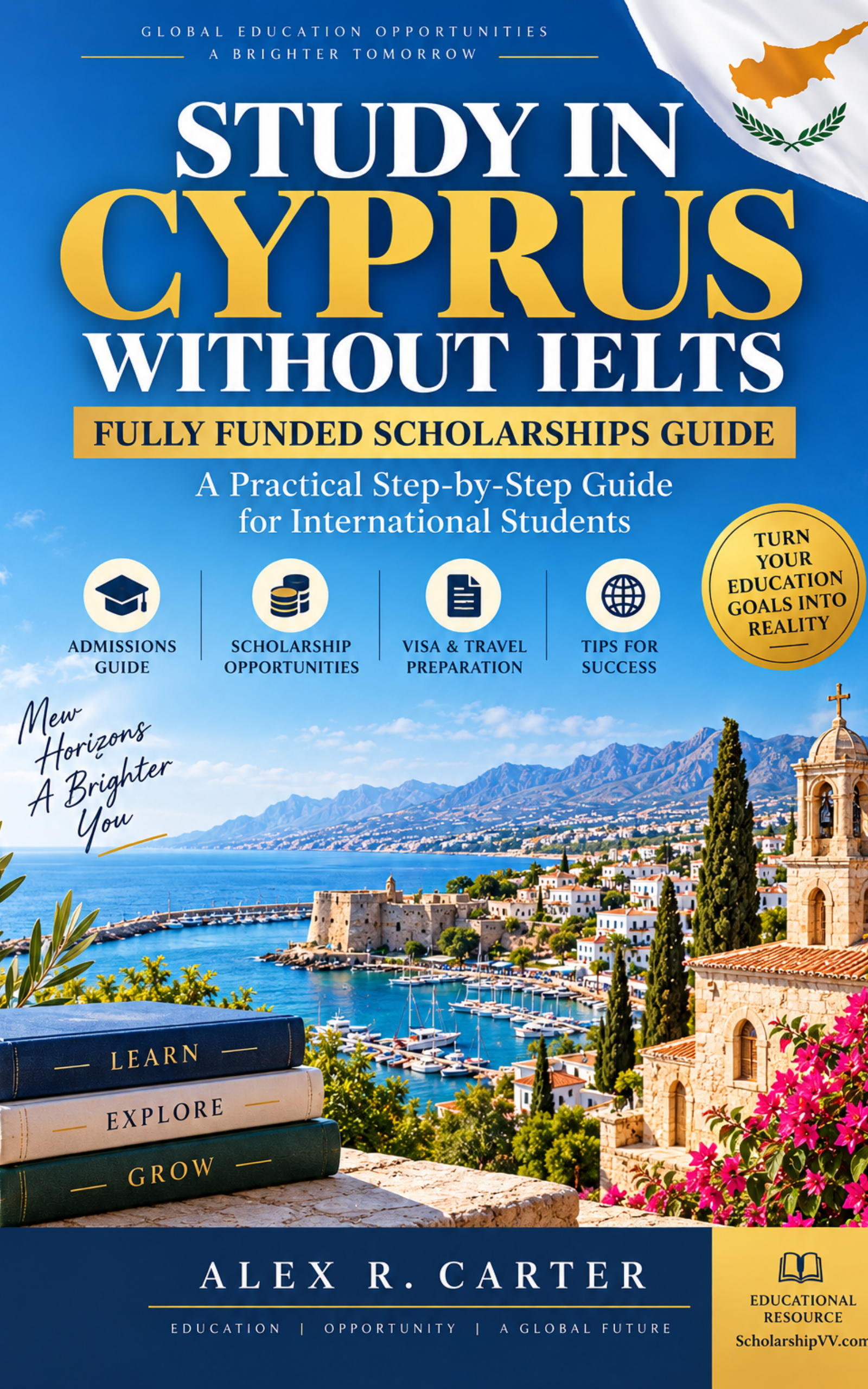
A PRACTICAL STEP-BY-STEP GUIDE FOR INTERNATIONAL STUDENTS
Studying abroad can feel financially out of reach for many international students. Tuition fees, accommodation, transportation, food, visa expenses, and other living costs can quickly add up. Cyprus, however, has become an interesting destination for students who are looking for an international education in a European setting while exploring scholarship and funding opportunities.
One question that many prospective students ask is: Can you study in Cyprus without IELTS?
The answer can be yes, depending on the university, program, and your previous education. Some institutions may accept alternative evidence of English proficiency, while others may assess students through their own language requirements. Similarly, scholarship opportunities vary considerably between universities and programs.
This guide explains how international students can approach the process, what “without IELTS” usually means, how to search for scholarships, and how to prepare a strong application.
Can You Study in Cyprus Without IELTS?
IELTS is one of the most widely recognized English-language tests, but it is not necessarily the only way a university can evaluate your English proficiency.
Some universities may consider alternatives such as:
Previous education completed in English
An official English-medium instruction certificate
Other recognized English-language tests
University-specific English assessments
Interviews or internal language evaluations
However, requirements differ. A university that accepts previous education in English for one program may require a language test for another.
Therefore, students should never assume that “IELTS not required” means that no proof of English proficiency will be requested. Always check the current admission requirements of the specific university and degree program before applying.
What Are Fully Funded Scholarships?
A fully funded scholarship generally refers to financial support that covers most or all major educational expenses. Depending on the scholarship, this could include tuition fees, accommodation, living expenses, insurance, travel support, or other costs.
The exact benefits can be very different from one scholarship to another.
For example, one scholarship may cover full tuition but provide no living allowance. Another may provide a tuition reduction together with a monthly stipend. Some awards may cover accommodation or other student expenses.
This is why students should read the scholarship's official terms carefully rather than relying only on the phrase “fully funded.”
Who Can Apply?
Eligibility depends on the scholarship and academic program. International students may need to meet requirements related to:
Academic qualifications
Previous grades or academic performance
English-language ability
Admission to an eligible program
Nationality or residency
Financial circumstances, where applicable
Leadership, extracurricular activities, or community involvement
Specific academic interests
Some opportunities may be designed for undergraduate students, while others target master's or doctoral applicants.
The first step is therefore identifying scholarships that match your academic level and intended field of study.
Step 1: Choose Your Degree and Field
Before searching for scholarships, decide what you want to study.
Think about your:
Current academic qualifications
Career goals
Preferred subject
Study level
Budget
Preferred university environment
For example, you might be interested in business, computer science, education, engineering, psychology, tourism, healthcare, or another discipline.
Having a clear target makes the scholarship search much easier because you can focus on programs that actually accept students with your background.
Step 2: Find Universities in Cyprus
Once you know your preferred subject, research universities offering relevant programs.
Look beyond the university name. Examine the actual degree page and check:
Admission requirements
Tuition fees
English-language requirements
Scholarship availability
Application deadlines
Required documents
International student requirements
Do not rely solely on social media posts or third-party scholarship lists. University requirements can change, and information published several years ago may no longer be accurate.
The university's official website should be your primary source for confirming current requirements.
Step 3: Look for IELTS Alternatives
If you do not have IELTS, investigate whether your target university accepts another form of English proficiency evidence.
For example, the admissions office may accept proof that your previous education was conducted in English.
You may need an official letter from your previous school, college, or university confirming the language of instruction.
Some universities may also accept another English test or conduct their own assessment.
This distinction is important: “without IELTS” does not necessarily mean “without English requirements.”
Step 4: Search for Scholarship Opportunities
After identifying suitable programs, investigate scholarships offered by the university or other legitimate funding organizations.
Create a simple spreadsheet containing:
InformationWhat to RecordUniversityUniversity nameProgramDegree and subjectScholarshipScholarship nameTuition coverageFull or partialLiving supportYes or noAccommodationIncluded or notIELTS requirementRequired or alternativeDeadlineApplication deadlineDocumentsRequired documents
This simple system can prevent you from missing deadlines and help you compare opportunities based on their actual conditions.
Step 5: Prepare Your Documents
Scholarship applications often require several documents.
Depending on the program, you may need:
Passport
Academic certificates
Academic transcripts
Curriculum vitae
Personal statement
Motivation letter
Recommendation letters
Proof of English proficiency or an accepted alternative
Portfolio, if applicable
Financial documents, where required
Prepare these documents early.
A strong application is not simply about having good grades. Your application should clearly explain who you are, what you want to study, why the program fits your goals, and what you hope to accomplish after graduation.
Step 6: Write a Strong Motivation Letter
The motivation letter can be one of the most important parts of a scholarship application.
Avoid writing a generic essay that could be sent to any university.
Instead, explain:
Why this field?
Describe what attracted you to your chosen subject and how it connects with your previous education or experience.
Why this program?
Explain why the specific program is relevant to your goals.
Why Cyprus?
Give a genuine reason for choosing Cyprus as a study destination rather than simply saying that you want to study abroad.
What are your future plans?
Explain how the education could contribute to your professional development and long-term goals.
Keep the writing specific, honest, and easy to understand.
Step 7: Apply Before the Deadline
Do not wait until the final day to submit your application.
University applications and scholarship applications can involve different deadlines. In some cases, you may need to receive admission before being considered for particular funding opportunities.
Check whether the scholarship application is automatic after admission or requires a separate application.
Keep copies of every document you submit and save confirmation emails.
What About Visa and Other Costs?
Even if you receive a scholarship, you should not assume that every expense will automatically be covered.
Students may still need money for items such as:
Visa-related expenses
Travel
Initial accommodation
Transportation
Personal expenses
Required documentation
Deposits or administrative fees
The exact requirements depend on your circumstances and the relevant authorities.
Before making financial commitments, confirm the current requirements through official sources.
Common Mistakes Students Should Avoid
One of the biggest mistakes is trusting websites that promise guaranteed scholarships or guaranteed admission.
No legitimate guide can guarantee that every applicant will receive funding.
Another common mistake is applying to a program without checking its current admission requirements.
Students should also avoid submitting the same generic motivation letter everywhere. Scholarship committees want to understand the individual applicant and their goals.
Finally, never pay someone simply because they claim they can “guarantee” a scholarship. Verify opportunities through official university or scholarship-provider sources.
Final Thoughts
Studying in Cyprus without IELTS may be possible for some international students, but the exact requirements depend on the university, program, and applicant's educational background. Alternative English-language evidence may sometimes be accepted, but students should verify the requirements directly with the institution.
Finding a fully funded scholarship also requires patience and careful research. Instead of searching randomly, identify suitable programs, verify their requirements, organize your documents, prepare a strong application, and keep track of every deadline.
If studying in Cyprus is part of your international education plan, preparation can make the entire process much easier.
Want a Step-by-Step Guide?
Our book, Study in Cyprus Without IELTS: Fully Funded Scholarships Guide — A Practical Step-by-Step Guide for International Students, is designed for students who want a structured resource to help them understand the process.
It provides practical guidance for researching universities, understanding English-language requirements, finding scholarship opportunities, preparing application documents, writing stronger applications, and planning the next steps toward studying in Cyprus.
Instead of trying to piece together information from dozens of different sources, the book brings the process into one practical guide that students can work through step by step.
Your journey to studying abroad starts with research, preparation, and finding the opportunity that matches your circumstances.