
How to Review Your Beliefs After Reading a Mindset Book: A 5-Step Method
You close the book feeling sharp. You highlight twelve quotes and tell a friend your life…
Read More
You are reading a self-help book when a particular sentence makes you stop. Perhaps the author is discussing procrastination, and you recognize how often you postpone important tasks. Maybe a chapter about personal boundaries reminds you of relationships in which you have struggled to say no. Or a lesson about taking responsibility makes you think about a decision you would rather forget.
Instead of feeling inspired, you feel defensive, embarrassed, frustrated, or even disappointed in yourself.
Experiences like these can make reading self-help books more complicated than expected. You may have started reading because you wanted to improve your habits, understand yourself better, or make progress toward a personal goal. Yet some of the lessons seem to expose problems you would prefer not to examine.
Learning how to handle uncomfortable lessons while reading self-help books begins with understanding that discomfort is a reason to reflect, not an automatic instruction to change or reject an idea. A difficult lesson might reveal something worth addressing, but it might also be poorly explained, unrealistic for your circumstances, or based on assumptions that do not apply to you.
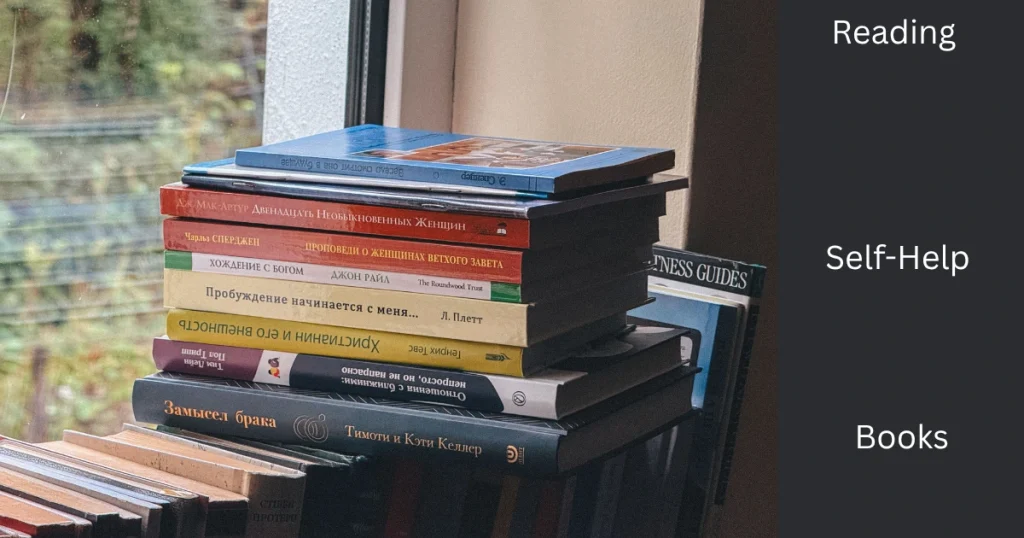
The goal is not to agree with every author or criticize yourself whenever a lesson feels personal. It is to examine ideas thoughtfully, identify what is useful, and decide how to apply it without losing your sense of perspective.
Self-help books often discuss habits, decisions, beliefs, relationships, and patterns of behavior. These subjects can feel personal because they relate to the choices people make in everyday life.
Several reasons can explain why a particular lesson is difficult to accept.
Some beliefs become part of how people understand themselves. You might believe that working longer hours is the only way to succeed, that asking for help demonstrates weakness, or that avoiding disagreements keeps relationships healthy.
When an author challenges one of these beliefs, the disagreement may feel more personal than intellectual.
For example, a book about productivity might argue that being constantly busy is not the same as making meaningful progress. A reader who has always measured success by the number of hours worked may find that idea difficult to accept.
Rather than immediately defending your existing belief, consider what supports it. Is it based on experience, expectations from other people, or an assumption you have never examined closely?
You do not need to abandon a belief simply because an author questions it. You can use the disagreement as an opportunity to decide whether the belief still serves you.
A chapter about procrastination, poor communication, or inconsistent habits may describe behavior you recognize in yourself.
This recognition can be uncomfortable because it draws attention to a gap between what you intend to do and what you actually do.
Imagine someone who repeatedly promises to read for thirty minutes each evening but spends that time scrolling through social media. A passage about protecting attention might make the reader aware of the difference between their intentions and their routine.
That awareness can be useful, provided it leads to a better understanding of the behavior rather than a judgment about personal worth.
Recognizing a pattern does not mean you have failed permanently. It gives you a clearer starting point for deciding what, if anything, needs to change.
Some authors use forceful language to encourage action. They may describe certain behaviors as excuses, weaknesses, or signs of a poor attitude.
Although direct language can motivate some readers, it can make others feel misunderstood or criticized.
For instance, an author might suggest that anyone who wants to improve their career should simply wake up earlier and work harder. That advice overlooks differences in working hours, caregiving responsibilities, health, and available opportunities.
You can examine the underlying idea without accepting every judgment attached to it. The useful principle might be to protect time for important work, not to follow one particular morning routine.
A strategy that works well for one person may be difficult for someone with different resources, responsibilities, or priorities.
A book might recommend hiring help to free up time, moving to a new city to pursue opportunities, or investing money in a business. These suggestions may be impractical for someone managing a limited budget or caring for family members.
Your circumstances deserve consideration. Recognizing a limitation is not the same as making excuses.
The important question is whether there is a realistic way to apply the underlying principle within your current situation.
An uncomfortable passage can provoke an immediate reaction. You might want to close the book, argue with the author, or accept the criticism without questioning it.
Neither reaction necessarily helps you understand the lesson.
Instead, slow down and examine what happened.
Return to the sentence or paragraph that triggered your reaction. If necessary, write the central idea in your own words.
Be specific. Instead of writing, “This chapter makes me feel bad,” try, “The author suggests that I avoid difficult conversations, and I recognize that I sometimes postpone them.”
The second statement identifies something you can examine. It also prevents a general feeling of discomfort from turning into a judgment about your entire personality.
You might feel embarrassed, annoyed, worried, sad, or defensive. Identify the feeling as accurately as you can.
There is no need to add another layer of criticism by telling yourself that you should not feel that way.
For example, you might write, “I feel defensive because this advice reminds me of a conversation I avoided last week.”
That observation does not prove that the author is correct. It simply helps you understand your reaction.
Sometimes a lesson feels harsher in your mind than it actually is on the page.
Suppose an author writes that consistent habits can help people make progress toward their goals. You interpret the statement as, “If I struggle to maintain a routine, I am lazy.”
Those are different claims.
The author may be discussing the value of repetition, while your interpretation turns the idea into a judgment about your character.
Read the passage again and ask what it actually says. If the author explicitly makes a sweeping or judgmental claim, you can evaluate that claim separately.
Look at the situation the author describes and compare it with your own experience.
Does the recommendation address a problem you genuinely face? Does it assume resources or opportunities you do not have? Is there a practical reason to question it?
You might discover that the lesson is relevant but needs adjustment. You might also decide that it is not suitable for your circumstances.
Both outcomes are reasonable when they follow careful consideration.
You do not have to resolve every disagreement while reading.
If a passage leaves you confused or emotionally overwhelmed, mark the page and continue another time. Returning to it after a break may help you consider the idea more calmly.
The purpose of pausing is not to avoid difficult questions indefinitely. It is to give yourself enough space to evaluate them thoughtfully.
One of the most important skills in personal development is learning to recognize a mistake without treating it as proof that something is fundamentally wrong with you.
Self-reflection examines behavior, circumstances, decisions, and possible improvements. Self-blame often turns a specific problem into a sweeping negative judgment.
Consider these two statements:
The first statement identifies a behavior that can be examined. The second makes a much broader judgment that offers little practical guidance.
When a self-help lesson exposes a weakness or mistake, try replacing harsh conclusions with specific questions.
| Self-critical thought | More constructive question |
|---|---|
| I always give up too quickly. | At what point do I usually lose motivation, and what makes continuing difficult? |
| I have no discipline. | Which part of my routine is difficult to maintain? |
| I keep making bad decisions. | What information or considerations did I overlook in this particular decision? |
| I am terrible at managing money. | Which spending patterns are making it harder to meet my financial goals? |
| I cannot communicate properly. | What could I express more clearly in my next conversation? |
These alternatives do not deny responsibility. They make responsibility more practical by directing attention toward specific actions and conditions.
It is also worth remembering that not every disappointing outcome results from a personal mistake. Limited resources, unexpected events, conflicting responsibilities, and circumstances beyond your control can affect results.
A balanced assessment considers both your choices and the situation in which you made them.
A self-help book can introduce valuable ideas, but publishing a book does not make every recommendation reliable.
Bestselling status, confident language, attractive success stories, and enthusiastic reader reviews do not automatically establish that a method works for everyone.
Approach difficult lessons with curiosity and critical judgment.
A useful recommendation should give you some understanding of why the suggested action might help.
If an author recommends writing down daily priorities, for example, consider the proposed benefit. A written list may make tasks easier to remember, clarify what needs attention, and help you decide how to use limited time.
You can then judge whether that reasoning makes sense for your circumstances.
Be more cautious when a book offers sweeping conclusions without explaining the assumptions behind them.
Self-help books sometimes discuss psychology, health, productivity, neuroscience, or human behavior. Claims in these areas may deserve additional verification, particularly when they are presented as established scientific facts.
When a claim matters to your decision, look for reliable sources such as peer-reviewed research, recognized professional organizations, and reputable research institutions.
Distinguish between an author’s personal experience, an interpretation of research, and a conclusion supported by a broader body of evidence.
A compelling personal story can illustrate an idea, but it does not establish that the same approach will work for every reader.
Good advice usually becomes more useful when its boundaries are clear.
For example, a recommendation to reduce distractions may help someone who struggles to concentrate. However, it does not automatically address every reason a person might have difficulty completing tasks.
If an author presents one technique as the universal answer to a complex problem, consider whether important circumstances have been overlooked.
Be cautious about advice that demands unquestioning obedience, discourages reasonable questions, or promises extraordinary results without credible support.
Statements suggesting that every unsuccessful person simply lacks discipline, or that a single method guarantees financial success, oversimplify complicated situations.
You should be able to examine a book’s claims without feeling that you must accept the entire message to benefit from it.
Reading critically is not a rejection of personal growth. It is part of learning responsibly.
Sometimes the central idea in a book is useful, but the recommended action does not fit your circumstances.
In such cases, look for the principle behind the advice and consider a more practical way to apply it.
An author might recommend spending an hour each morning reading, planning, exercising, or working on a personal project.
If your schedule includes long working hours, commuting, and family responsibilities, an hour may not be realistic.
You could preserve the underlying principle of consistency by setting aside ten minutes at a time that suits your schedule.
The smaller commitment may be easier to maintain and adjust as your circumstances change.
A personal finance or business book might recommend paying for professional assistance, purchasing specialized equipment, or investing in a new opportunity.
If money is tight, following the recommendation without considering the cost could create unnecessary financial pressure.
Instead, identify the problem the purchase is supposed to solve. Then investigate whether a lower-cost alternative, a gradual approach, or a free learning resource could address the same need.
The aim is to make a thoughtful decision, not to imitate someone else’s financial circumstances.
Some self-help books encourage readers to protect their time by saying no to requests that do not match their priorities.
That principle can be useful, but real responsibilities sometimes require compromise. A parent, student, employee, or caregiver may not be able to decline every request that interrupts a preferred schedule.
You can still practice reasonable boundaries by communicating your availability, asking for help when appropriate, and distinguishing urgent responsibilities from optional commitments.
For example, rather than refusing every request from a colleague, you might say, “I can help with this tomorrow morning, but I cannot complete it before the end of today.”
This protects your existing commitments while offering a realistic alternative.
An author may recommend a competitive approach to career growth that does not fit your preferred way of working with other people.
You can examine the goal behind the recommendation without adopting the entire approach.
If the goal is to communicate your achievements more effectively, for instance, you might choose to document your contributions and discuss them clearly rather than exaggerating your accomplishments or undermining colleagues.
Personal development does not require abandoning your values. It requires deciding which changes are worthwhile and how to make them responsibly.
Recognizing a problem is useful, but understanding alone does not automatically change a habit.
Once you have decided that a lesson is relevant, identify a manageable action that allows you to put it into practice.
Use this five-step process.
Here are two examples of how the process can work.
Imagine that you are reading a book about productivity and realize that you regularly postpone important assignments.
Your first reaction might be to conclude that you lack discipline. However, a closer look reveals that you often delay tasks because they seem too large to begin.
You decide to test a smaller approach.
Instead of promising to complete an entire assignment in one evening, you choose one concrete starting action: open the document, review the instructions, and write three preliminary points.
You schedule that action for 7:00 p.m. at your desk.
After trying it, you review the result. Perhaps starting feels easier, but you discover that your phone repeatedly interrupts your attention. You can then experiment with placing the phone outside your immediate reach during the next session.
The original lesson becomes a practical investigation rather than a reason to criticize yourself.
Suppose a book explains the value of protecting time for important commitments. You recognize that you often accept additional requests even when your schedule is already full.
Instead of deciding that you must refuse every request, you identify one situation in which a clearer response would help.
The next time someone asks you to take on an optional task, you check your existing commitments before answering.
If you cannot reasonably fit it into your schedule, you explain your availability and, when appropriate, offer another time.
Afterward, you consider whether the response was clear, respectful, and realistic.
You might discover that the conversation was easier than expected. Alternatively, you may need to practice expressing your limits more clearly.
Either way, you have a specific experience to learn from.
One unsuccessful attempt does not necessarily mean a lesson is useless. Likewise, one successful attempt does not prove that a method will work in every situation.
Look for meaningful changes in your behavior, understanding, or decision-making over time.
Perhaps you begin assignments earlier, recognize when your schedule is overloaded, or pause before agreeing to a request.
These improvements may be modest, but they provide more useful information than judging yourself against an ideal version of who you think you should be.
If a strategy repeatedly fails, reconsider the approach. You may need to adjust the action, change the timing, address an obstacle, or decide that another method is more suitable.
The purpose of applying a lesson is to learn what works in your circumstances, not to demonstrate perfect discipline.
Self-reflection can be uncomfortable, but reading should not become a continuing exercise in shame or pressure.
If a book repeatedly leaves you feeling inadequate, guilty, or discouraged, take those reactions seriously without assuming that the book must be entirely wrong or that you are the problem.
Start by giving yourself permission to pause.
You can put the book aside for a few days, skip a section, or choose another book that approaches the subject more thoughtfully. There is no obligation to finish every book you begin.
Next, consider the nature of the advice. Does it offer realistic steps, acknowledge different circumstances, and allow readers to make independent decisions? Or does it rely heavily on blame, fear, sweeping judgments, or promises that seem too broad to be credible?
If you remain uncertain, compare the idea with other reputable sources. A different perspective may help you distinguish a useful challenge from an oversimplified recommendation.
It can also help to discuss the issue with someone you trust. Another person may notice assumptions you overlooked or help you consider alternatives without turning the discussion into a judgment of your character.
If the distress persists or significantly affects your daily life, consider speaking with a qualified mental health professional. Self-help books can provide general information and ideas for reflection, but they are not substitutes for professional care when that care is needed.
You do not have to force yourself through distressing material to prove that you are committed to improving your life.
The next time a lesson makes you uncomfortable, set aside a few minutes to work through the following exercise. You can write your answers in a notebook or record them in a document.
1. What specific lesson made me uncomfortable?
Write the central idea in one or two sentences. Avoid turning it into a general judgment about yourself.
2. What did I feel or think when I read it?
Identify your reaction and, if possible, what made the lesson feel personal. You might have remembered a past decision, disagreed with the author’s assumptions, or worried about making a change.
3. What evidence supports or challenges the author’s point?
Consider your own experience, the reasoning offered in the book, and any relevant evidence you can verify. Distinguish what you know from what you are assuming.
4. Which part of the lesson, if any, fits my circumstances?
You may agree with the entire idea, find one useful principle, or conclude that the recommendation does not apply to your situation.
Be specific about what you accept and what you question.
5. What is one small, realistic action I can take?
If the lesson is useful, identify a practical step. If it needs adjustment, decide how to adapt it. If the advice seems unsuitable, misleading, or potentially harmful, you can choose not to apply it.
After answering the questions, decide what to do next:
Keep your notes and return to them when you have had an opportunity to try the action. You may learn something new that changes your original assessment.
This exercise is a practical reflection tool, not a diagnostic test or a substitute for professional support. Its purpose is to help you make a more considered decision about what you read.
Yes. A lesson may challenge an established belief, remind you of a mistake, or draw attention to a behavior you want to change. Discomfort does not automatically mean the lesson is correct or incorrect. Examine the idea, consider your circumstances, and decide whether it offers something useful.
No. Treat the author’s recommendations as ideas to evaluate rather than instructions you must obey. Consider the reasoning, supporting evidence, limitations, and suitability of each recommendation. Apply advice that is useful and reasonable, adapt what needs adjustment, and question claims that seem misleading or unsafe.
Start by separating the decision or behavior you regret from your overall worth as a person. Identify what happened, consider what you could reasonably have done differently, and determine whether there is a constructive step you can take now. When appropriate, making amends or changing a future behavior may be more useful than repeatedly criticizing yourself.
Review how you applied the recommendation and whether it addressed the actual problem. The method may need adjustment, the circumstances may be different from those described by the author, or the advice may not be appropriate for you. Consider alternative approaches and seek qualified guidance when the issue requires specialized support.
After each reading session, write down one useful idea in your own words and connect it to a specific situation in your life. Choose a small action to test, then review what you learned. Brief notes and deliberate practice can help you engage with the material more actively than simply highlighting passages or trying to remember every point.
The most challenging moments in a self-help book are not always the ones that provide the greatest insight. Sometimes a difficult passage highlights a genuine opportunity for change. At other times, it reveals an assumption that deserves questioning or advice that does not fit your life.
You can learn from both experiences.
When a lesson feels personal, pause before accepting or rejecting it. Identify the idea, examine your reaction, consider the available evidence, and decide how the recommendation relates to your circumstances. If it offers something useful, translate it into a realistic action. If it requires adjustment, adapt it. If it is unsuitable, give yourself permission to move on.
Personal growth does not require agreeing with every author, correcting every perceived weakness, or changing your life all at once. It requires the willingness to examine your choices honestly while maintaining enough perspective to recognize your limitations, responsibilities, and strengths.
A self-help book is most useful when it helps you think more clearly about your life and make better-informed decisions. Read with curiosity, question what deserves questioning, and give yourself room to learn through experience.
The goal is not to become the person every book describes. It is to use what you read to make thoughtful decisions about the person you want to become.

You close the book feeling sharp. You highlight twelve quotes and tell a friend your life…
Read More
[…] Related “How to Handle Uncomfortable Lessons While Reading Self-Help Books […]