15 Books That Help Kids Build Better Focus, Memory, and Study Habits
Introduction Some children seem to sit down with their homework and immediately know what to do.…
Read More
Artificial intelligence is no longer something children only hear about in science fiction movies. AI is already part of everyday life. It helps power voice assistants, recommends videos and games, recognizes faces and images, and even helps people find information online.
That naturally makes many parents wonder: What should my child actually know about AI, and which books can explain it in a way they will understand?
Finding a good AI book for a child between 8 and 12 can be harder than it sounds. There are plenty of books with “AI” in the title, but they are not all equally useful. Some focus mostly on futuristic robots, while others are written at a level that is too advanced for younger readers.
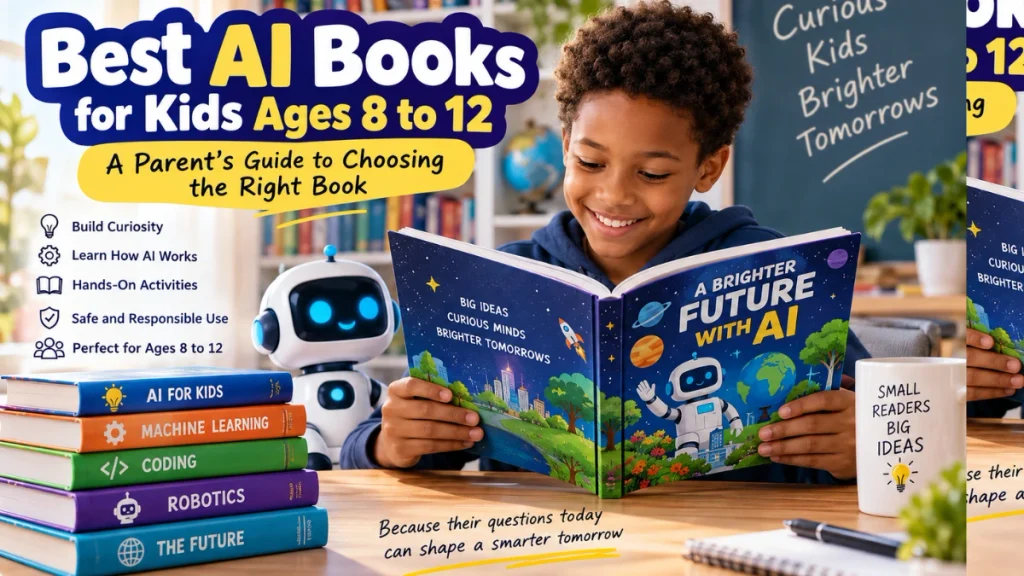
The best books do something different. They make complicated ideas easier to understand, encourage curiosity, and help children see technology as something they can explore and create with.
In this guide, we’ll look at what makes a good AI book for kids, what parents should watch out for, and several books worth considering.
When you shop for children’s books about topics such as dinosaurs, space, or the human body, you have decades of educational publishing to choose from.
Artificial intelligence is different.
The technology is developing incredibly quickly. A book that focuses heavily on a particular app or AI tool can become outdated surprisingly fast. Features change, new tools appear, and the way people use AI continues to evolve.
However, the basic ideas behind AI are much more stable.
Children can learn about concepts such as how computers recognize patterns, how machines learn from data, how algorithms make decisions, and why an AI system can sometimes produce a wrong answer.
These fundamentals are much more valuable than simply learning about whichever AI tool happens to be popular when the book was published.
For that reason, parents should look for books that teach understanding rather than hype.
Before buying a book, take a few minutes to consider what your child will actually get from it.
A good children’s AI book should go beyond saying that AI can write, draw pictures, recognize objects, or answer questions.
It should give children at least a basic understanding of what happens behind the scenes.
The explanation doesn’t need to involve complicated mathematics or programming. Simple explanations and relatable examples can be enough to introduce important ideas.
Children often remember something better when they can interact with it.
Activities, experiments, coding exercises, and simple projects can turn an abstract subject into something exciting and understandable.
A project-based book can be especially useful for children who become bored with pages of explanations.
This is one of the most important things children should learn.
AI can be useful, but it isn’t perfect. An AI system can provide incorrect information, misunderstand a question, produce biased results, or be used inappropriately.
A good book should not make AI seem like magic or present it as something that is always right.
Teaching children to ask questions and check information is just as important as teaching them what AI can do.
The difference between an 8-year-old and a 12-year-old can be significant.
Some children in this age group are already comfortable reading longer nonfiction books, while others prefer pictures, short explanations, and hands-on activities.
Don’t rely only on the age range printed on the cover. If possible, look at a few sample pages before buying.
Take a look at the author’s background.
Authors with experience in computer science, education, technology, or children’s nonfiction may be better positioned to explain technical ideas accurately and in an age-appropriate way.
An author biography can often tell you whether the book was created by someone who understands the subject or simply produced to follow a popular trend.
Not every book marketed as an AI book for children is worth buying.
Here are a few warning signs to keep in mind.
Be cautious when a book repeatedly promises that AI will “change everything” but doesn’t explain what AI actually is or how it works.
Children need understandable information, not just exciting predictions.
A book that only talks about the amazing things AI can do gives children an incomplete picture.
Children should also understand that AI can make mistakes and that people need to use technology responsibly.
Look at the actual page count and content before buying.
Some books use very large text, oversized illustrations, or lots of empty space to create the appearance of a longer book.
Older books are not automatically bad. In fact, books that teach fundamental computer science concepts can remain useful for years.
The problem comes when a book is heavily focused on specific apps, tools, or screenshots that have changed significantly since publication.
If you’re looking for a starting point, these books offer different ways for children to explore technology, coding, robotics, and the ideas that connect to artificial intelligence.
This is a strong choice for children who want to do more than simply read about artificial intelligence.
The book takes a project-based approach and introduces machine learning through practical activities using kid-friendly tools. Instead of keeping everything theoretical, it gives children opportunities to experiment and see how machine learning works.
It is particularly suitable for confident readers who enjoy technology and want to build things themselves.
Best for: Kids who learn best through projects and hands-on experimentation.
Artificial intelligence didn’t appear out of nowhere. Understanding the history of computing can give children a much better foundation for understanding today’s technology.
This illustrated biography introduces children to Ada Lovelace and her important place in the history of computing.
Although it isn’t an AI book specifically, it provides an interesting look at the early ideas behind computer programming and helps children understand that today’s technology has a much longer history than they might expect.
Best for: Younger readers, children who enjoy biographies, and kids interested in the history of computers.
Coding and artificial intelligence are closely connected.
Children don’t necessarily need to become programmers before learning about AI, but understanding basic coding concepts can help them see technology as something they can build rather than something they simply use.
This book introduces programming in an approachable way and connects coding with real-world problem solving.
It can be a good starting point for children who are curious about computers but haven’t explored coding before.
Best for: Beginners who want to build a foundation in coding and technology.
For children who love building, experimenting, and taking things apart to see how they work, robotics can be a particularly exciting introduction to technology.
This book combines explanations with hands-on projects and introduces children to robotics and automation.
Robotics also provides an easy way to connect physical machines with software and automation concepts that children may later encounter when learning about AI.
Best for: Kids who enjoy building, experimenting, and hands-on projects.
Hello Ruby is aimed more toward younger readers, but it can still be a useful introduction for children at the younger end of the 8-to-12 range.
Rather than overwhelming children with technical terminology, it introduces computational thinking through stories and illustrations.
Children learn ideas such as breaking problems into smaller steps and recognizing patterns. These are useful thinking skills that can make more advanced technology concepts easier to understand later.
Best for: Younger children or readers who prefer stories and illustrations when learning new concepts.
A book can be an excellent starting point, but children who become interested in AI may quickly want to explore beyond the pages.
That’s where other learning resources can help.
A child might explore age-appropriate coding activities, join a school or library coding club, watch educational videos, or use trusted resources to learn how current AI technology works.
Hands-on learning is particularly valuable because children can move from simply asking “What is AI?” to asking “How can I make something with it?”
recommended posts
15 Best Books for Kids Who Ask “Why?” | Curious Kids Guide
It’s also worth remembering that books and online resources serve different purposes.
A good book can provide a structured introduction and explain important concepts clearly. Online resources can help children explore newer developments that may have appeared after the book was published.
Together, they can create a much richer learning experience.
There isn’t one perfect AI book for every child between 8 and 12.
100,000 Whys for Curious Kids – READ HUB
A child who loves building may get much more from a robotics or machine learning project book. A child who enjoys stories may prefer an illustrated introduction to computing. Another child may be ready for coding and want to start creating their own projects.
The most important thing is to choose a book that matches your child’s age, reading ability, interests, and curiosity.
AI is changing quickly, but the skills behind understanding technology—asking questions, recognizing patterns, solving problems, experimenting, and thinking critically—will remain valuable for a very long time.
So don’t worry about finding the book that teaches your child everything about artificial intelligence.
Start with a book that makes them curious enough to ask the next question.
That curiosity is where real learning begins.
Introduction Some children seem to sit down with their homework and immediately know what to do.…
Read MoreA child checks the same homework question three, four, or five times before finally putting the…
Read More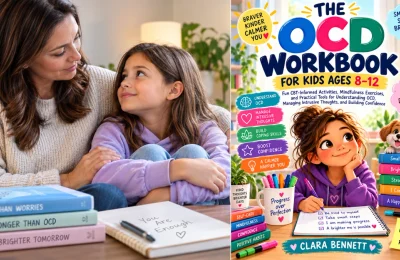
How to Help a Child with OCD, A child repeatedly asks, “Are you sure?” A few…
Read More
[…] Parents should provide warmth and emotional support, but repeated reassurance can become part of an OCD cycle for some children. The best way to handle reassurance seeking depends on the child’s situation and treatment plan. If the child is receiving treatment, parents should ask the treating professional how they should respond. […]